How Long Does Physical Therapy Take to Work for Common Injuries?
If you are an athlete or active adult dealing with a nagging injury, the question on your mind is rarely if you will get better — it is how fast you can get back to doing what you love. Whether shoulder impingement is disrupting your performance or low back pain is stalling your golf game, you want more than general advice. You want a clear plan and real results.
At Elevated Strength & Rehab, we understand that for high performers, every week on the sidelines matters. Understanding the biology of healing — and the tools we use to support it — can help you plan your comeback with confidence.
Understanding Your Body's Healing Timeline
Healing follows a biological process, but it is not the same for every tissue or every person. The duration of your recovery depends largely on which structures are involved and the severity of the damage.
Muscle strains often improve within two to four weeks because muscles have a strong blood supply that supports faster repair. Tendons and ligaments, however, take considerably longer. Conditions like Achilles tendinopathy, IT band syndrome, or a meniscus injury often require six to twelve weeks or more, as these tissues have a limited blood supply and repair at a slower rate.
The goal at Elevated Strength & Rehab is not simply to wait out these timelines. By addressing movement compensations early, we ensure that as your tissue heals, it is being loaded correctly — reducing the risk of re-injury that often affects athletes who return too soon.
How a Performance-Focused Approach Accelerates Recovery
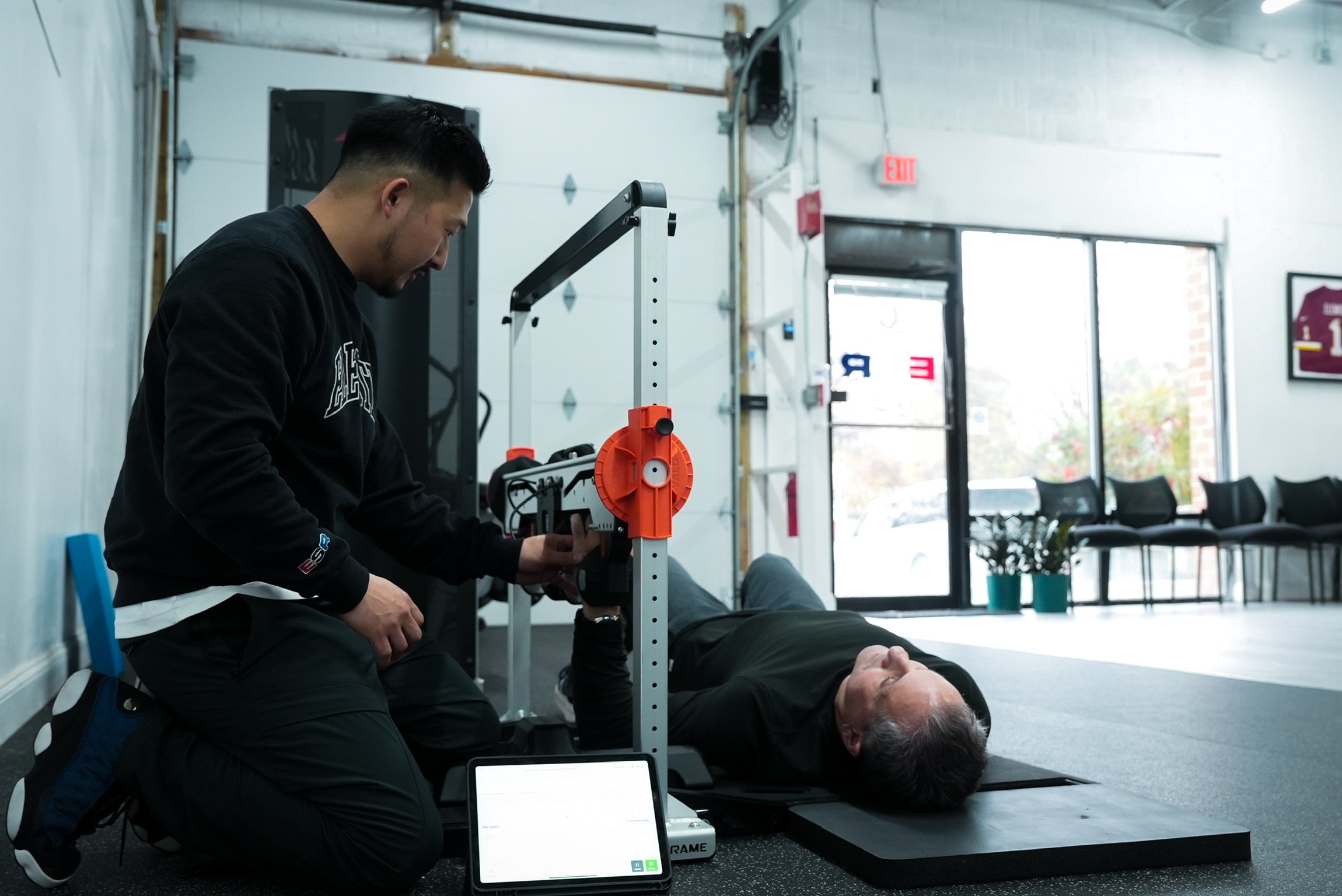
Not all physical therapy is created equal. A high-volume clinic model — where you spend most of your session with an aide — often leads to stalled progress and prolonged recovery. At Elevated Strength & Rehab in Gaithersburg, MD, every session is a full, one-on-one appointment with a Doctor of Physical Therapy, giving us the time and focus to move you forward efficiently.
Our approach moves through four distinct phases designed to get you back to peak performance.
Phase 1: Reset
The first priority is managing pain and restoring basic mobility. Using dry needling, manual therapy, myofascial release, and compression therapy, we create a window of opportunity where you can move with less restriction and begin building a foundation for recovery.
Phase 2: Re-Learn
Once pain is under control, we focus on neuromuscular re-education. This phase addresses the movement patterns that may have contributed to your injury in the first place — whether that is the hip mechanics behind runner's knee or the postural habits driving neck pain.
Phase 3: Reload
This is the performance phase. Using strength and conditioning principles and tools like blood flow restriction (BFR) training and therapeutic exercise, we progressively load your tissues to build the resilience needed for high-impact activity.
Phase 4: Re-Engage
The final phase centers on return-to-sport progressions. Whether your goal is sprinting, jumping, or swinging a club, we use plyometrics and sport-specific progressions to ensure you are physically prepared for the full demands of competition.
Recovery Timelines for Common Injuries
While every case is individual, here is a general framework for what to expect with some of the most common conditions we treat.
Ankle sprain: Two to six weeks depending on severity and prior injury history
Hamstring strain: Three to eight weeks, with a focus on progressive loading to prevent recurrence
Rotator cuff pain or shoulder impingement: Six to twelve weeks, often improved significantly with manual therapy and targeted shoulder strengthening
Plantar fasciitis: Six to twelve weeks, supported by soft tissue work and load management
ACL injury or post-surgery rehab: Six to twelve months, guided by objective return-to-sport testing
Low back pain or sciatica: Highly variable — many patients see meaningful improvement within four to eight weeks with consistent care
These timelines are starting points, not guarantees. Factors like sleep, activity levels, and adherence to your home program all play a significant role.
Data-Driven Testing to Track Your Progress
One of the most frustrating parts of recovery is not knowing where you stand. At Elevated Strength & Rehab, we remove the guesswork by using objective performance testing to measure your progress and guide clinical decisions.
Force Plate Testing and VALD Testing quantify strength, power, and symmetry between limbs
Isokinetic / Dynamometer Testing measures muscle output to identify deficits that may not be obvious during movement
Movement Screens identify compensations that increase injury risk
Return-to-Sport Testing provides objective benchmarks before you return to full activity
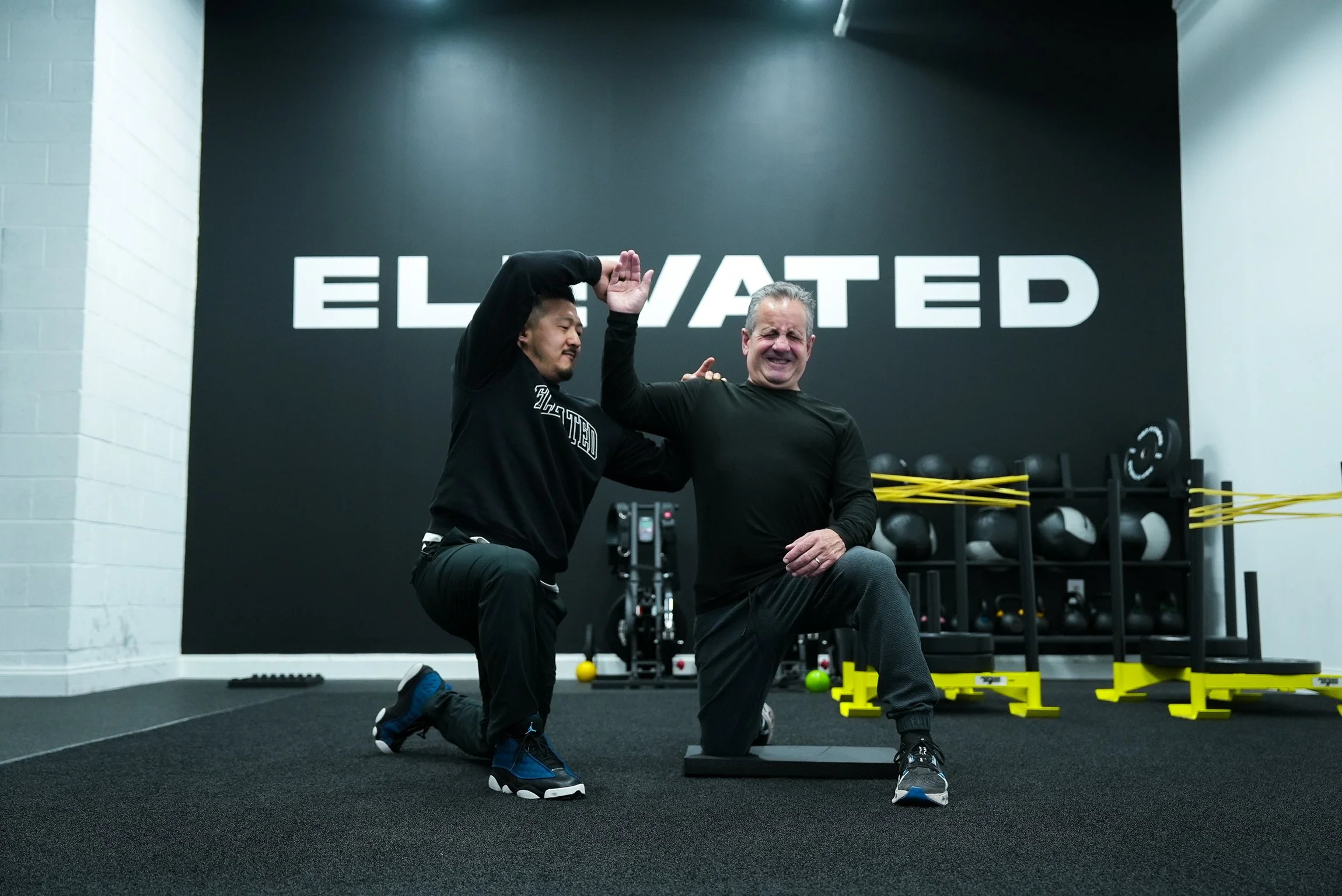
For golfers, our Titleist Performance Institute (TPI) Testing goes a step further. We assess how physical limitations — such as restricted hip mobility or reduced thoracic rotation — affect your swing mechanics. Addressing these factors during rehab often means returning to the course with better movement and more power than before the injury.
What You Do Outside the Clinic Matters
The hour you spend with us is only part of the equation. What happens during the rest of your day has a direct impact on how quickly you progress.
Consistency with your home program: Your prescribed therapeutic exercises reinforce the gains made during hands-on sessions. Skipping them slows progress in the same way skipping training sessions would.
Sleep: Your body repairs tissue during deep sleep. Prioritizing seven to nine hours of quality rest supports the biological processes driving your recovery.
Nutrition and hydration: Adequate protein and hydration provide the building blocks your tissues need to heal and adapt.
Stress management: Chronic stress affects how the nervous system processes pain. Staying consistent with your plan and maintaining a recovery-focused mindset supports better outcomes.
We also offer home visit and mobile PT services for patients who need support outside the clinic setting, ensuring continuity of care regardless of your schedule or circumstances.
Start Your Recovery with a Clear Plan
The biological timeline of healing cannot be skipped, but it can be optimized. If you are tired of slow progress and generic treatment, a performance physical therapy approach that respects your athletic goals can make a meaningful difference.
At Elevated Strength & Rehab, we are committed to helping athletes and active adults in Gaithersburg, MD recover with expert, one-on-one care. Contact us today to schedule your discovery call and take the first step toward getting back to the sport and the life you love.