You Don't Have to Stop Training to Fix Pain
National Physical Therapy Month — from Dr. Jonathan Kim, Elevated Strength Rehab
If you've ever avoided seeing a physical therapist because you were afraid of hearing two words — "stop lifting" — you're not alone.
It's the number one reason active adults put off getting help for nagging pain. They'd rather train around it, foam-roll it, or hope it fades than risk being told to sit on the couch for six weeks.
Here's the thing: that fear is based on a myth. And the myth is costing people months of progress.
Where the myth comes from
For decades, the standard medical answer to musculoskeletal pain was simple: rest. Stop doing the thing that hurts. Come back when it feels better.
That advice was built for a sedentary population. For someone who trains four days a week, "just rest" isn't harmless — it's its own kind of injury. Strength starts declining within two to three weeks of detraining. Conditioning fades even faster. And here's the cruel part: the strength and muscle you lose are the exact things protecting your joints in the first place.
So you rest for a month, the pain quiets down, you come back — and you're weaker, more deconditioned, and more vulnerable than when you started. The pain returns. The cycle repeats.
Rest didn't fix anything. It just paused the clock.
Pain doesn't mean damage — and it doesn't mean stop
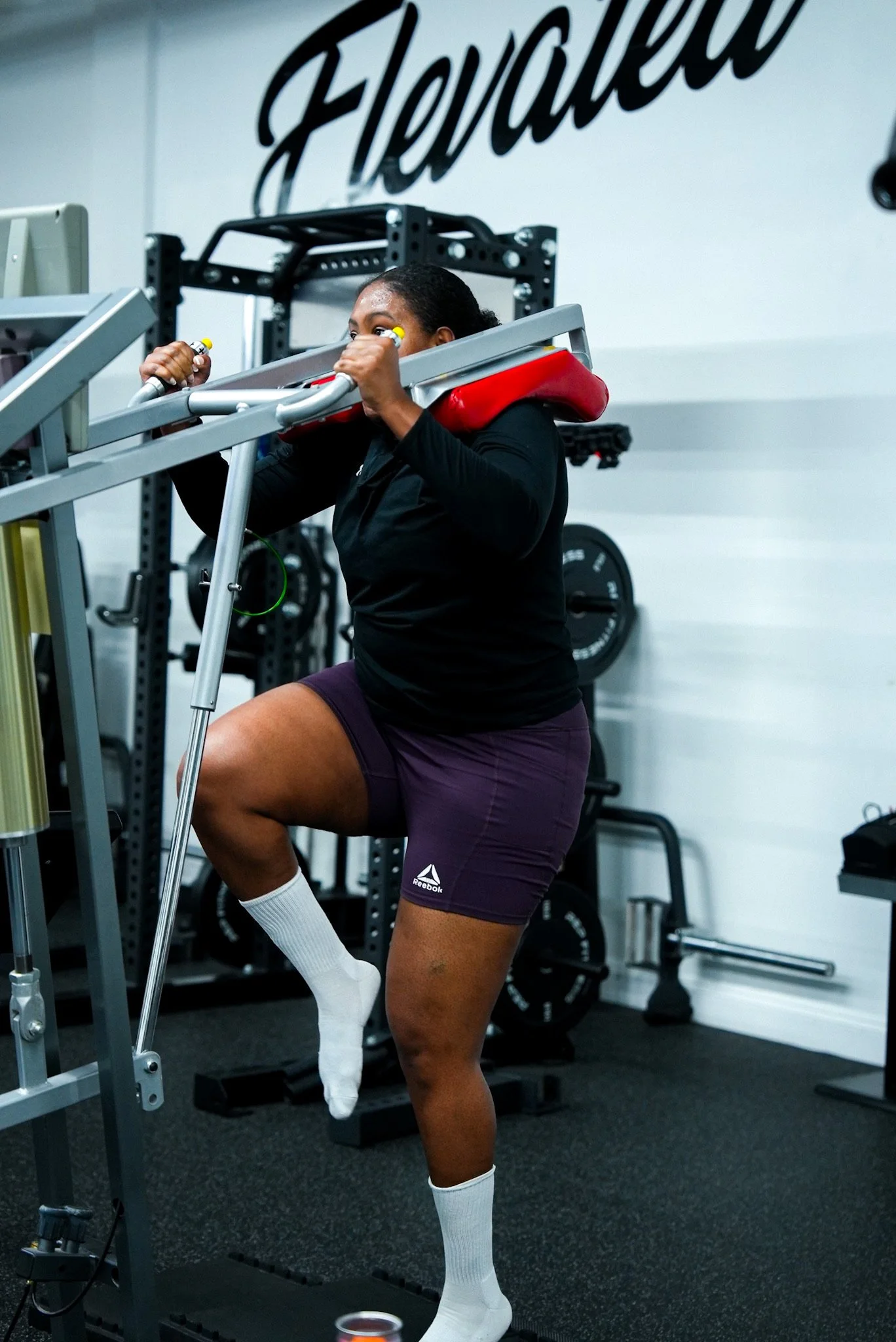
One of the most important things I tell lifters: pain is a signal, not a diagnosis.
A cranky knee on squats doesn't automatically mean something is torn or broken. More often, it means a tissue is being asked to handle more load than it's currently prepared for — a capacity problem, not a structural catastrophe. And capacity problems are solved with smarter loading, not zero loading.
Tendons are the perfect example. Achy patellar or elbow tendons don't heal by resting. Tendons literally need progressive load to remodel and get stronger. Complete rest leaves them weaker than before. The research on this is clear: the fix for tendon pain is a well-designed loading program, not a layoff.
What real rehab looks like: parallel, not sequential
The old model says rehab and training happen in sequence — stop training, do your rehab, then eventually return.
The model I use says they happen in parallel. We pull three levers:
Modify the movement, not the mission. Knee barking on back squats? We keep you squatting — box squats, tempo squats, belt squats, split squats. Shoulder cranky on barbell press? Landmine press, neutral-grip dumbbells, floor press. The pattern stays; the irritating variation goes.
Modify the load and volume. Sometimes the fix is as simple as capping RPE, dropping to higher rep ranges, or cutting the one top set that's causing the flare-up. You keep 90% of your training exactly as it is.
Add targeted work for the weak link. This is the actual "rehab" part — direct strengthening of whatever's underprepared, whether that's quads, glutes, rotator cuff, or trunk. Thirty minutes, a few times a week, on top of your normal training.
You keep training. We rebuild the painful pattern underneath you. Most of my patients never miss a week in the gym.
When you actually should get checked out
Training around pain is smart — ignoring it indefinitely isn't. Come see me if:
Pain is changing how you move (limping, compensating, avoiding depth)
It's lasted more than a few weeks despite smart modifications
It's getting worse, not better You have numbness, tingling, or real weakness
It's messing with sleep or daily life, not just training
These are signs the problem needs a professional set of eyes, not another deload week.
The bottom line
You don't have to choose between fixing pain and staying strong. The two goals aren't in conflict — done right, they're the same project.
October is National Physical Therapy Month, which makes it a good time to say this plainly: if something's been nagging you for weeks and you've been putting off getting it looked at because you don't want to stop training — that's exactly the situation I'm here for.
I see patients right here at Nesfield Performance. One-on-one, for a full hour, built around the way you actually train. If you've been training around something, let's take a look — a $69 evaluation is the easiest way to find out what's going on and get a real plan.
Dr. Jonathan Kim, PT, DPT — Elevated Strength Rehab
Book: (301) 215-2695 | elevatedstrengthrehab.com